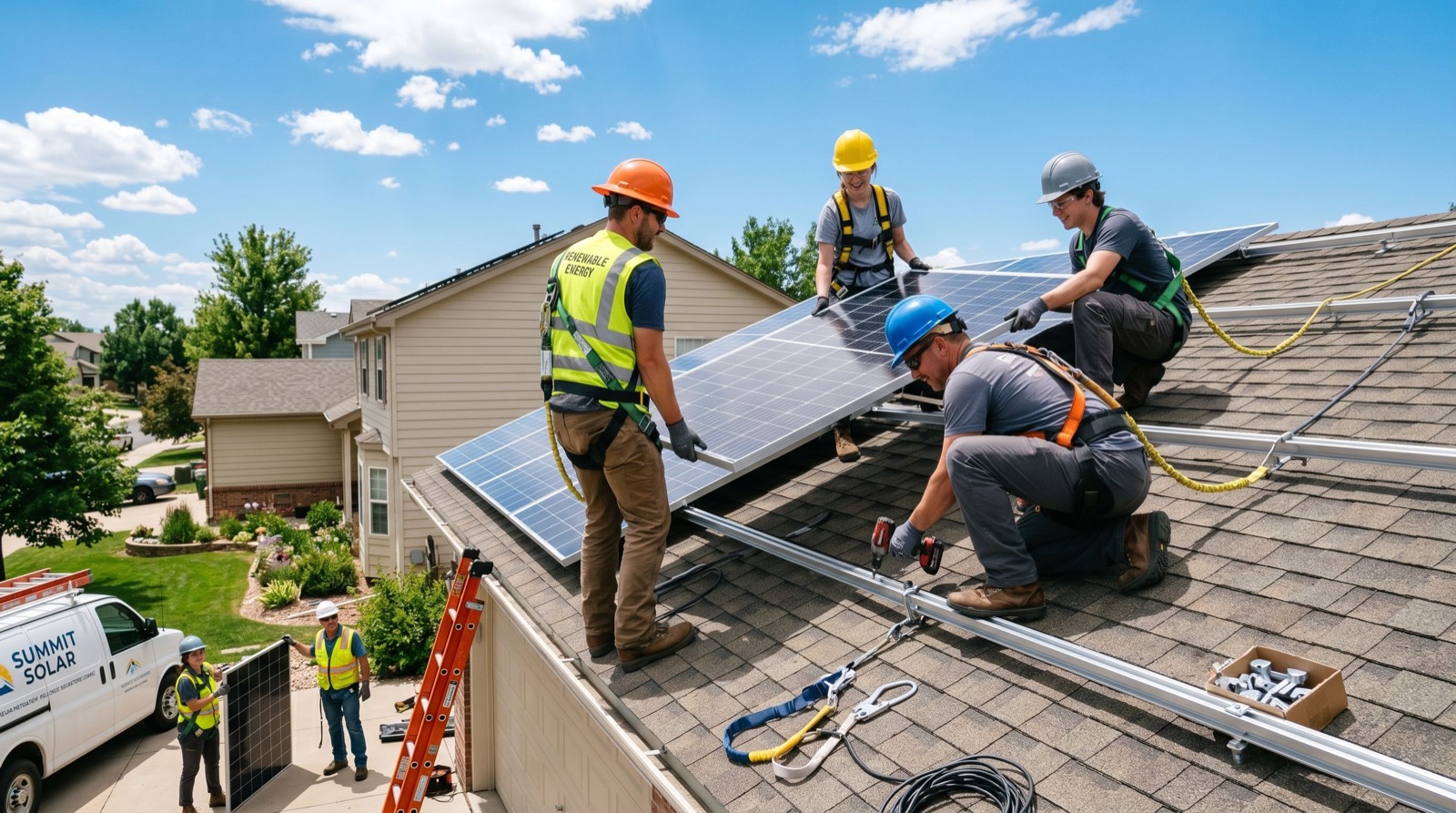

Factories, cold storages, mills, and even farm tube wells across South Punjab are quietly switching to the sun, and for good reason: commercial power bills bite harder than residential ones. For business owners, smart solar installation in Multan is less about going green and more about protecting margins against relentless tariff hikes.
This guide takes a business lens rather than a household one. It covers commercial system sizing, three-phase considerations, agricultural pumping loads, and the return-on-investment math that a finance manager actually cares about. If you run an enterprise here, this is the practical brief you need before 2026 budgets close.
Why commercial solar installation in Multan pays back fast
Businesses consume most of their energy during daylight hours, which lines up perfectly with solar generation. A shop, workshop, or factory running through the afternoon uses power exactly when the panels produce the most, maximising direct self-consumption and slashing the grid bill.
Add South Punjab’s exceptional irradiance and the arithmetic becomes compelling. Commercial arrays here frequently pay for themselves in three to four years, after which the electricity is effectively free for two more decades of operation.
The three-phase advantage
Most commercial premises run on three-phase supply, which allows larger inverters and balanced load distribution. A properly designed three-phase solar system keeps your machinery humming while feeding surplus generation back through net metering for credit against night-time or cloudy-day usage.
Sizing for different business types
Commercial loads vary enormously, so a mill and a boutique need very different systems. The table below shows typical sizing and expected outcomes for common enterprises in the region.
| Business type | Suggested size | Primary daytime load | Typical payback |
|---|---|---|---|
| Retail shop | 10-15 kW | Lighting, AC, refrigeration | 3 – 4 years |
| Small factory | 25-50 kW | Motors, compressors | 3 – 4 years |
| Cold storage | 50-100 kW | Continuous refrigeration | 3 – 5 years |
| Farm tube well | 15-30 kW | Water pumping | 2.5 – 4 years |
These estimates assume Tier-1 panels and industrial-grade inverters. For agriculture, solar pumping is especially attractive because it replaces expensive diesel entirely, and the pump runs when the sun shines and crops need water most.
Solar for agricultural tube wells
Diesel-driven tube wells drain farm budgets and demand constant fuel runs. A solar pumping system removes that recurring cost, and because irrigation happens in daylight, no battery is usually required. Many growers around Multan report their solar pump paying for itself in under three seasons.
The ROI math a finance team will approve
Business decisions rest on numbers, so here is the framework. Take your average monthly commercial bill, estimate the portion offset by solar, and divide the system cost by the annual saving to find the simple payback period.
- Pull twelve months of electricity bills and note peak daytime demand.
- Size the array to cover 70 to 90 percent of daytime consumption.
- Estimate annual generation using local irradiance figures.
- Calculate yearly saving from offset units plus net-metering credit.
- Divide capital cost by annual saving for payback in years.
Because commercial tariffs are higher than residential ones, the saving per unit is larger, which is why business payback often beats household payback. When you engage trusted professionals, ask them to model this ROI transparently using your actual bills rather than generic averages.
What quality commercial hardware includes
Industrial installations demand components rated for continuous, heavy-duty operation. Cutting corners on a commercial roof is far riskier than on a home, because downtime directly costs revenue.
- Industrial inverters with high uptime and remote monitoring.
- Robust mounting engineered for wind loads on large roofs.
- Proper cable management and DC combiner boxes with protection.
- SCADA or app monitoring so a fault is flagged instantly.
You can source certified modules, inverters, and mounting through vetted suppliers of solar products in Pakistan, which simplifies warranty claims because everything is documented under one roof.
How do rising tariffs change the calculation?
Every tariff increase makes an existing solar system more valuable, because each self-generated unit avoids an ever-costlier grid unit. In effect, solar acts as a hedge against future price rises, locking in your cost of energy for 25 years.
The global trend supports this thinking. The International Energy Agency highlights that solar is now the cheapest source of new electricity in many markets, and Pakistani businesses are increasingly capturing that advantage on their own rooftops.
Original tip: phase your investment
Here is a strategy that reduces upfront capital strain for cautious businesses. Design the full array on paper, then install it in two phases: cover your heaviest daytime load first, prove the savings on a real bill, then expand using the cash the first phase generates. This staged rollout keeps your accountant comfortable while still capturing early returns.
Managing downtime risk for enterprises
For a business, an offline solar system is not just a technical fault, it is lost saving on every daylight hour it stays down. That is why commercial projects justify features that homeowners might skip, such as remote monitoring and a service-level agreement with guaranteed response times.
Ask your installer what happens if an inverter faults on a peak-production Tuesday. A serious commercial provider offers rapid diagnostics, spare availability, and a clear escalation path. That reliability is worth paying for when your operations depend on daytime power.
Insurance and structural checks
Large rooftop arrays add weight and wind exposure, so a structural assessment protects both the building and the investment. Many businesses also add the solar asset to their property insurance. These steps are inexpensive relative to the array cost and prevent expensive disputes later.
Training staff to read the numbers
A solar system delivers its full value only when someone watches it. Assign a staff member to check the monitoring dashboard weekly and log generation against expectations. A steady, unexplained drop usually points to soiling, shading, or a failing string that is easy to fix early.
- Log daily generation and compare month over month.
- Schedule cleaning before the dusty pre-monsoon weeks.
- Reconcile net-metering credits against the utility bill.
- Report any anomaly to the installer promptly.
This light-touch discipline typically recovers several percent of annual output that neglected systems quietly lose, directly improving your payback.
Frequently Asked Questions
Can solar power run heavy factory machinery in Multan?
Yes, when properly sized. A three-phase system with an adequately rated inverter can support motors and compressors during daylight, though soft starters may be recommended for the largest loads.
Do agricultural solar pumps need batteries?
Usually not. Irrigation happens in daylight, so a direct solar pumping system works without storage, which keeps the cost low and payback fast.
Is commercial net metering different from residential?
The principle is the same, but commercial connections often involve larger sanctioned loads and three-phase meters. A capable installer handles the specific paperwork for your tariff category.
How much roof area does a 50 kW system need?
Roughly 250 to 350 square metres of un-shaded roof, depending on panel wattage and mounting layout. A site survey confirms the exact usable area.
Conclusion
For enterprises, solar installation in Multan is a straightforward financial upgrade: fast payback, a hedge against tariff hikes, and decades of near-free daytime power. Model the ROI with your real bills, specify industrial-grade hardware, and consider a phased rollout to ease cash flow. Book a commercial site survey now and turn your rooftop into a profit centre for 2026.