Online Tutoring in 2026: A Practical Guide to Better, Faster Learning
Online tutoring has moved from a pandemic-era backup plan to the default way millions of students now study. In 2026, a strong internet connection, a webcam, and the right tutor can outperform a crowded classroom for many learners. If you are weighing whether virtual lessons are worth it, this guide walks through the real benefits, the pitfalls to avoid, and how to pick the right platform for your goals.
Whether you need help with math homework, IELTS preparation, or coding, the core promise is the same: personalised attention, flexible scheduling, and measurable progress. The trick is knowing what separates a good session from a wasted hour.
Why Online Tutoring Works So Well in 2026
The biggest advantage is personalisation. A one-to-one session adapts to your pace instead of the average pace of a class of thirty. Struggling with quadratic equations? You spend the full hour there instead of racing ahead.
Convenience is the second driver. There is no commute, no fixed classroom, and sessions can run early morning or late evening. According to the U.S. National Center for Education Statistics, flexible and technology-supported learning models continue to expand access for students who previously had few options nearby.
Finally, the talent pool is global. You are no longer limited to tutors in your town. Families searching for online tutoring can now match with subject specialists across cities and countries, often at a lower cost than in-person alternatives.
Who Benefits Most From Virtual Lessons?
- School students needing steady support in math, science, or English.
- Exam candidates preparing for SAT, IELTS, O/A Levels, or university entrance tests.
- Adult learners picking up a new language or a professional skill.
- Busy professionals who can only study after work hours.
Online vs In-Person Tutoring: A Quick Comparison
Both formats have a place, but the trade-offs are clearer than most parents expect. Here is how they stack up on the factors that matter most.
| Factor | Online Tutoring | In-Person Tutoring |
|---|---|---|
| Scheduling flexibility | Very high — evenings, weekends, early mornings | Limited by travel and location |
| Tutor selection | Global — pick by subject and rating | Restricted to your local area |
| Average cost | Often 20–40% lower | Higher due to travel and overhead |
| Resources shared | Screen share, recordings, digital notes | Physical worksheets only |
| Best for | Focused, goal-driven learners | Younger children needing supervision |
How to Choose the Right Online Tutor
Not every tutor is a good fit, and the cheapest option is rarely the best value. Use a short checklist before committing to a package of lessons.
- Check subject depth. A generalist can help with homework; a specialist gets you exam-ready.
- Ask for a trial lesson. Reputable platforms offer one so you can test the teaching style.
- Confirm the tech setup. Interactive whiteboards, screen sharing, and recorded sessions make a real difference.
- Read recent reviews. Look for evidence of grade improvement, not just friendliness.
- Match the schedule. Consistency beats intensity — a weekly rhythm builds real progress.
Local expertise still matters for many families. Students searching for online tutors in Islamabad often want someone who understands their exact board syllabus and grading system, and that local alignment can be the difference between a B and an A.
Red Flags to Watch For
- No trial lesson or refund policy.
- Vague answers about qualifications or experience.
- Pressure to buy a large package immediately.
- Poor audio, video, or unreliable scheduling.
Getting the Most Out of Every Session
The platform gives you the tools, but results come from how you use them. From experience coaching learners, a few habits consistently separate students who improve fast from those who stall.
Come prepared with specific questions instead of a vague “I don’t get it.” Keep a running list of problem areas during the week so no session drifts. Ask your tutor to record lessons where possible, then rewatch the tricky parts before your next class.
Set a clear goal for each block of lessons — a target score, a chapter mastered, a conversation held entirely in a new language. Measurable goals keep both you and your tutor accountable. Comparing platforms is easier when you rely on quality service providers that publish transparent pricing and honest reviews.
Building a Study Plan That Sticks
A tutor is only half the equation; the other half is a routine you can actually follow. Start by blocking two fixed lesson slots each week and treat them as non-negotiable, the same way you would a class or a meeting. Consistency compounds, and skipping sessions is the single biggest reason progress stalls.
Between lessons, spend twenty to thirty minutes reviewing what you covered. This spaced review turns short-term understanding into long-term memory. For math and science, redo one worked example from memory; for languages, speak three new sentences out loud. Small, daily reinforcement beats last-minute cramming every time.
Finally, review progress with your tutor once a month. A quick check of what improved, what still feels shaky, and what to target next keeps everyone aligned. Learners who treat online tutoring as a partnership — rather than a passive service — consistently see the biggest gains in the shortest time.
Tools That Make Online Lessons More Effective
- Interactive whiteboards for working through problems together in real time.
- Session recordings so you can revisit tricky explanations later.
- Shared digital notebooks that keep every lesson’s notes in one place.
- Progress dashboards that show grades and mastery over time.
Not every platform offers all of these, so ask about them before you sign up. The right toolkit can turn a good tutor into a great learning experience, and it is often the deciding factor between two similarly priced options.
Frequently Asked Questions
Is online tutoring as effective as face-to-face lessons?
For most motivated learners, yes. Studies of blended and virtual learning show comparable or better outcomes when sessions are consistent and personalised. Younger children may still benefit from in-person supervision, but for exam prep and skill-building, online tutoring is highly effective.
How much does online tutoring cost in 2026?
Rates vary by subject and tutor experience, but online sessions typically run 20–40% cheaper than in-person equivalents because there is no travel or venue overhead. Many platforms offer discounted lesson packages.
What equipment do I need to start?
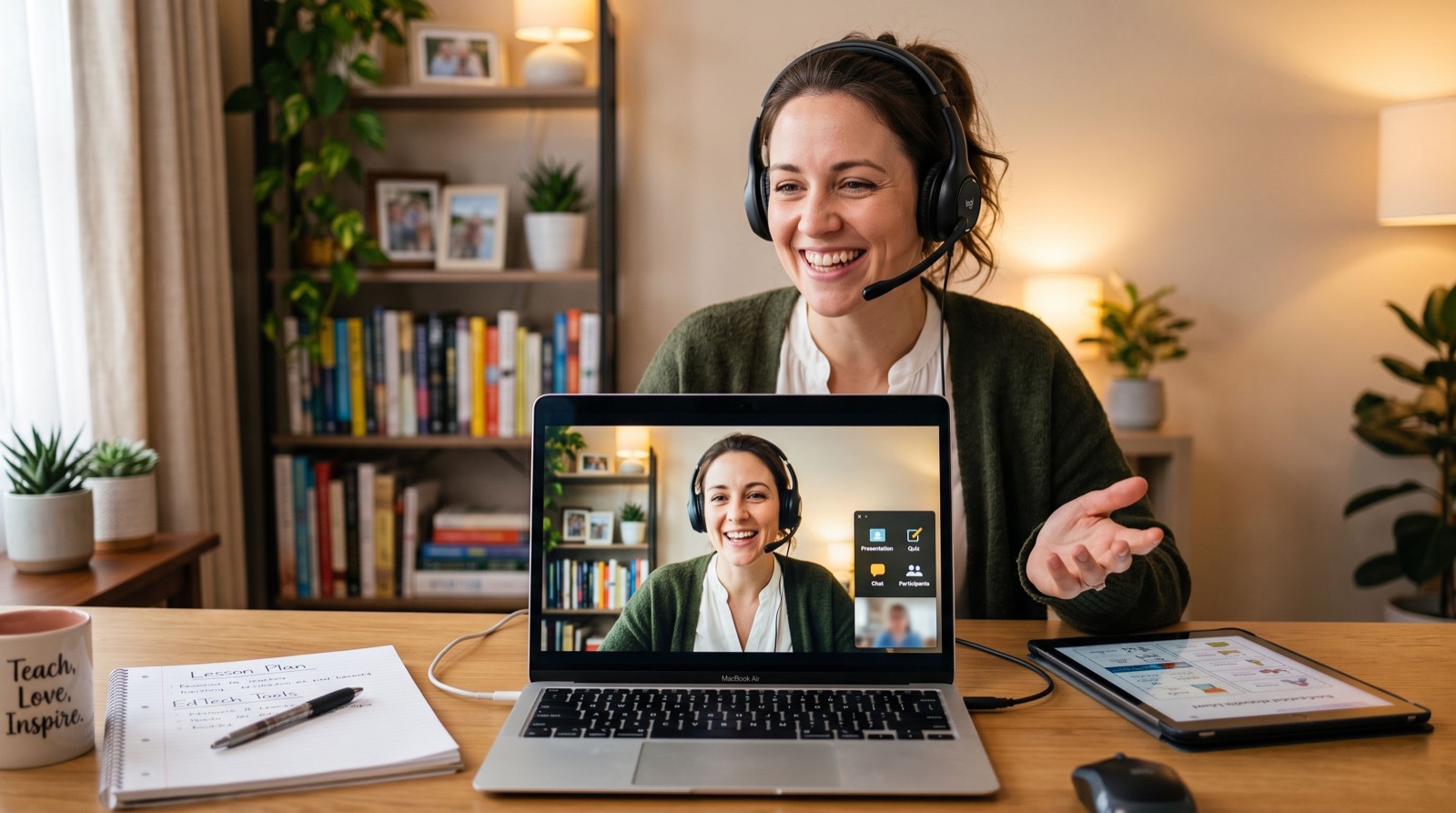
A stable internet connection, a laptop or tablet with a webcam, and a headset are enough. A quiet space and a second device for writing or a graphics tablet can improve subjects like math.
How do I know if a tutor is qualified?
Ask for their teaching background, request a trial lesson, and read recent verified reviews. A qualified tutor will happily explain their approach and share evidence of past student results.
The Bottom Line
Online tutoring in 2026 is flexible, affordable, and, when done right, genuinely more effective than the crowded classroom for focused learners. The key is choosing the right tutor, showing up prepared, and tracking measurable progress. Start with a trial lesson, set a clear goal, and let personalised online tutoring do the heavy lifting on your learning journey.